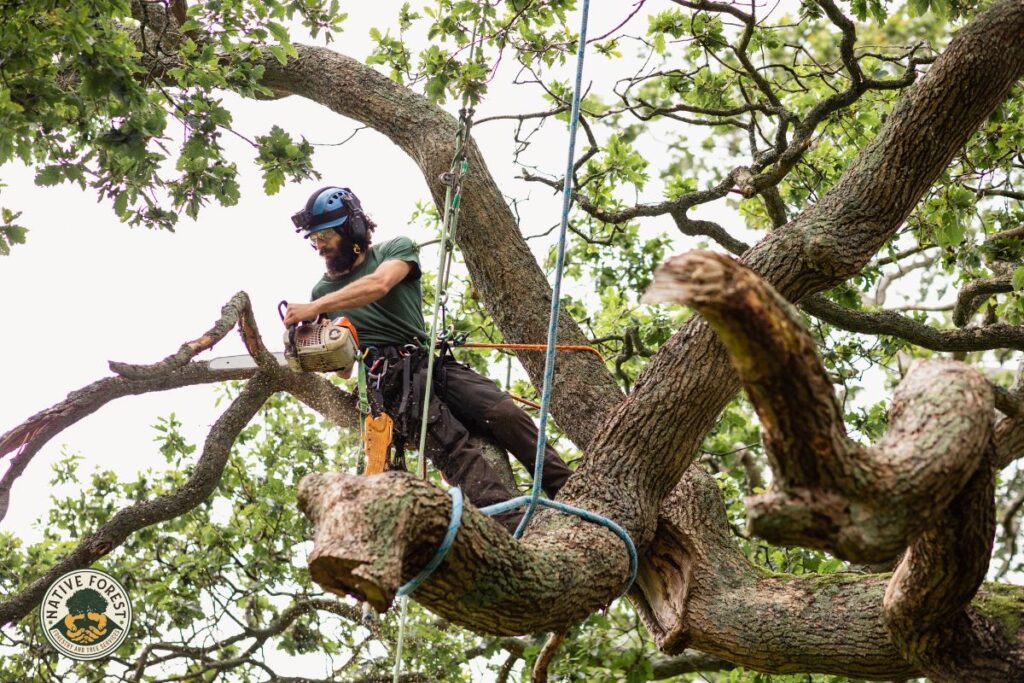

If you live in Surrey, Hampshire or West Sussex, you probably see a lot of trees around your home. Most of them are entirely safe, but some can become a dangerous tree without any obvious warning. As a homeowner it can be difficult to know when a tree is simply ageing or when it is putting your property or family at risk. This guide explains the key things to look for and when it is time to call in a professional.
Cracks in the trunk or major limbs
A visible crack is one of the clearest warnings. Small surface fissures are common, but deep splits or openings in the trunk can indicate internal weakness. Cracks around where a branch meets the main stem are especially serious as they often fail without much notice.
How to Spot the Early Warning Signs
Fungus or mushrooms growing at the base
Fungal growth is often misunderstood. Not all fungus is harmful, but when mushrooms appear at the base of a tree it can signal decay below the surface. If the roots or lower trunk are rotting, the structure of the tree is compromised. This usually progresses quietly and is difficult for homeowners to diagnose without help.
Cavities or hollow sections
A hollow trunk does not automatically mean a tree is unsafe, but the size and position of the cavity matter. A large hollow on one side can create imbalance. Cavities near the base are more serious than those higher up. Any sizeable opening is worth checking.
Noticeable movement in light wind
All trees move, but unsafe ones move in a particular way. If the trunk sways more than usual or rocks at the base during normal breezes, it could mean the roots are no longer anchored properly. This is a common cause of storm failures.
Dead or hanging branches
Deadwood is normal, but when large branches die suddenly or hang loose in the canopy, the tree may be under stress. Branches that have snapped but not fallen are a high risk to anyone below.
Roots lifting or soil heaving
If the soil around the base has lifted or cracked, it may show that the tree has begun to lean or pull away from the ground. This often happens after heavy rain or prolonged wind. Raised roots close to buildings, patios or driveways can also create structural issues.
Changes in leaf growth or thinning canopy
A decline in foliage can be an early warning of disease or internal decay. If one side of the canopy looks sparse or the leaves are smaller than usual, the tree may be struggling long before visible structural problems appear.
When to call a professional
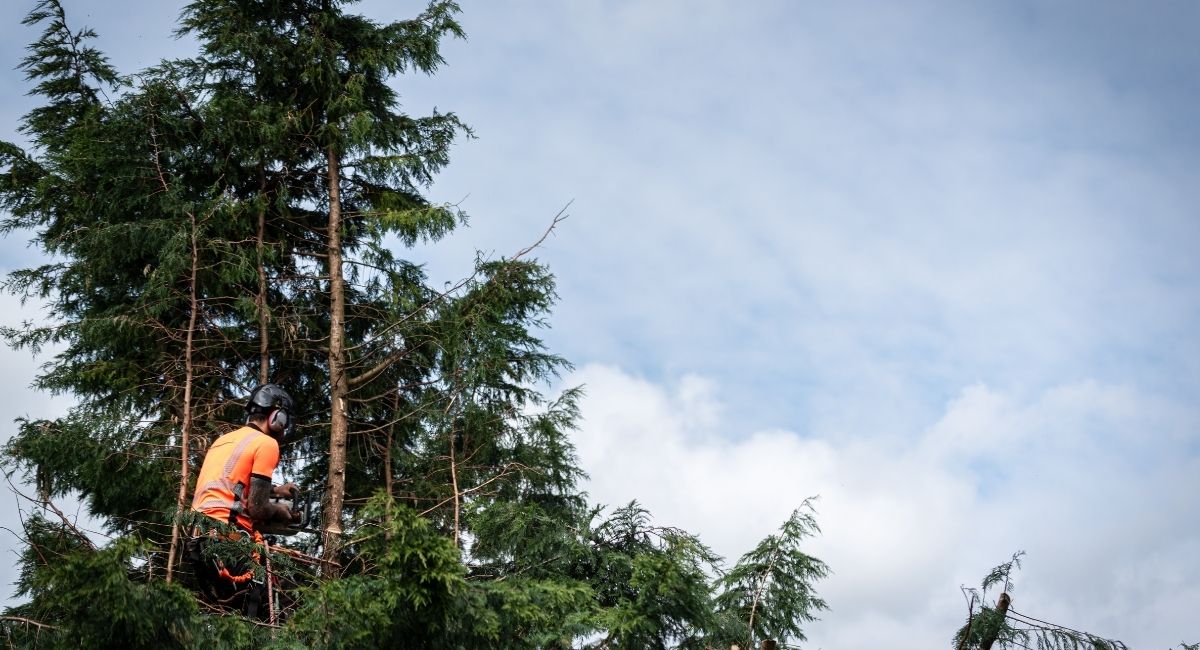
If you notice any of these signs, it does not always mean the tree needs removing. What it does mean is that the tree should be assessed by someone trained to spot structural defects and early decay. Hazardous trees are not always obvious. Some appear healthy from the outside but tell a very different story once inspected properly. A professional tree surgeon can advise whether pruning, cabling or removal is the safest option.
If you are unsure, we offer free safety checks
Native Forest specialises in hazardous tree assessments and safe removals. If something does not look right, or you simply want reassurance, get in touch and we can take a proper look for you.